Meter and valve testing
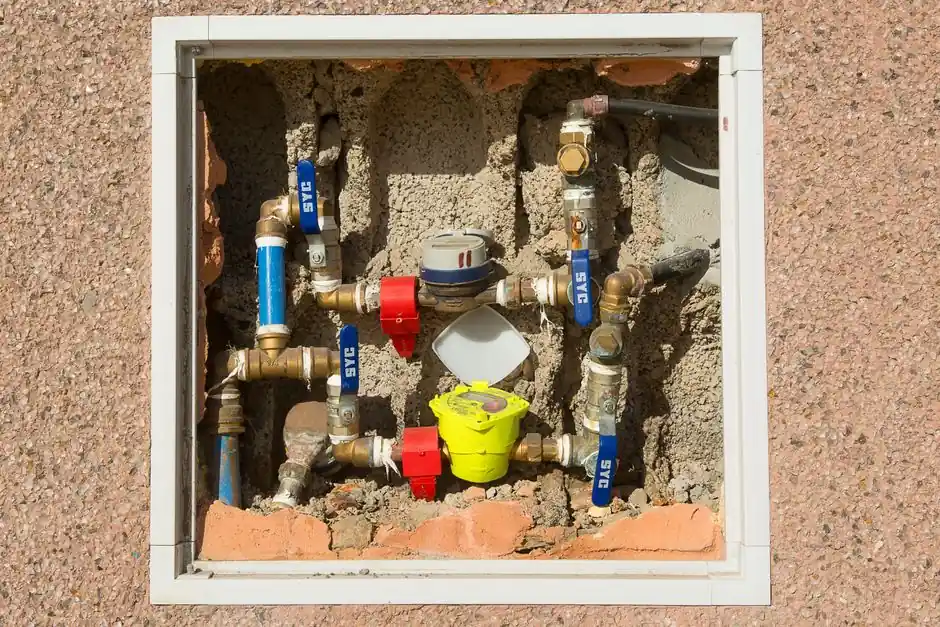
Closing the main inside the home while watching the meter shows whether water is still flowing in the buried section.
Quick Answer
According to the Village of Oak Park, leaks on public property are the Village's responsibility, while leaks between the parkway shut-off valve and the building belong to the property owner. The Village's ordinance requires owners to repair service leaks, and a plumbing permit is required.
The aim is to confirm the leak is on the service line and mark where it is.
Closing the main inside the home while watching the meter shows whether water is still flowing in the buried section.
A locator follows the route of the service line so the search can focus on the right path.
Sensitive microphones listen for leak noise at the surface, along the line.
Findings help you understand which section is yours and who to contact.
Oak Park's water comes from Lake Michigan through the City of Chicago, and the Village distributes it through roughly 105 miles of mains. Between the main and your meter is a service line, partly under the street and parkway and partly on your property. The Village's Public Works department states that it uses listening equipment to detect leaking pipes, and if a leak is found it may close the parkway valve to learn whether the noise continues. If it stops, the leak is on the owner's portion.
The Village describes owner responsibilities for service line leaks: a plumbing permit is required, the contractor must be registered with the Village, and the new line must meet the Village's pipe requirements, which include continuous Type K copper at least one inch in diameter for typical residences. The Village also notes that full replacement is recommended for iron or possibly lead lines.
Because the line is buried, damage can go unnoticed. You may notice a high bill, low pressure, a soggy patch of lawn or the sound of running water when all is off. Our exterior leak detection page covers outdoor leaks and our water leak repair page explains next steps after location.
The search follows the pipe route and narrows in.
Confirm
A meter test with the main closed or open helps tell whether the leak is on the buried section.
Trace
The pipe is located with electronic equipment so the search follows its actual path.
Listen
Ground microphones identify the point where leak noise is loudest.
Mark and report
The suspected location is marked and explained, including repair options and Village requirements.
Electronic pipe locator
Traces buried metallic lines or lines with tracer wire.
Ground microphone
Listens for leak noise on the surface above the line.
Leak noise correlator
Compares noise at two points to estimate the leak location.
Tracer gas (when appropriate)
A harmless gas can help find tiny leaks in some situations.
Isolation testing
Closing the main shut-off helps determine whether the loss is in the buried line.
Pressure testing
Monitors pressure loss in the isolated line.
Visual survey
Wet soil, sinkholes and unusually green patches can point to the leak.
01
What happens: The meter is checked with water off to see if the service line is leaking.
→ You learn if the leak is outside the building.
02
What happens: The line's path is traced and the area is listened to.
→ The wet spot is traced to a pipe, not just drainage.
03
What happens: The line is tested to confirm the problem and the repair path.
→ You can resolve it with a permit and a registered contractor.
Service line conditions vary by street and era:
Frank Lloyd Wright Historic District
Mature trees and old lines; careful excavation is important near historic landscapes.
Homes from 1906 to 1920 may still have older service lines.
Long runs from parkway valves on deeper lots may complicate repairs.
Lead service lines
Illinois law requires communities to plan for replacing lead service lines; learn what yours is made of.
Freeze depth
Northern Illinois commonly designs for about 42 inches of frost depth.
Tree roots
Mature street trees can stress or invade old lines.
Buried leaks can run for months.
Problem
Water loss underground does not show indoors.
How It’s Handled
Isolation and listening pinpoint the leak.
Problem
A leak can reduce pressure at fixtures.
How It’s Handled
Locating the leak helps determine if replacement is needed.
Problem
It can be unclear whether the leak is the Village's or yours.
How It’s Handled
Testing and the Village's process clarify it.

Digging in the wrong place is expensive.
Smaller excavation
Knowing the spot reduces digging.
Clear responsibility
You know what to do and whom to call.
Informed replacement decisions
Condition information helps you decide between repair and replacement.
Water savings
Stopping a continuous leak reduces wasted water.
LeakFix Oak Park does not perform excavation or repairs. We connect you with independent contractors, and it is your responsibility to verify license and insurance.
Straight answers about underground water line leak detection in Oak Park.
Check outdoor faucets, buried lines, irrigation tie-ins and wet spots in the yard.
View Exterior Leak DetectionSpot repair, repiping and service line replacement after the leak is found.
View Water Leak RepairVideo camera inspection and location of drain and sewer pipes and accessible lines.
View Pipe Inspection & DetectionFind broken heads, stuck valves and buried irrigation line leaks.
View Irrigation System Leak DetectionRead more about this topic on our blog.
Underground Water Line Leak Detection is available across all four Oak Park ZIP codes: 60301, 60302, 60303, 60304.
Tell us what you are seeing — a damp spot, a high water bill, a sound in the wall — and we will point you to a local leak detection professional who can look at it.
Phone
(708) 221-8167Address
439 Madison St
Oak Park, IL 60302
Service ZIP Codes
60301, 60302, 60303, 60304
Oak Park, Cook County, Illinois