Madison Street
A main corridor along the district's northern edge.
Quick Answer
Homes of this era commonly have original or partially replaced plumbing, cast-iron drains, basements and added upstairs bathrooms. Typical leaks involve corroded supply lines, drain joints, old shut-off valves, and water entering the basement.
The district, roughly bounded by Madison Street, Harrison Street, Gunderson Street and South Ridgeland Avenue, was built by S.T. Gunderson and Sons and designed by architect Frank DeMoney. It holds 230 residential buildings from 1906 to 1920 and was added to the National Register of Historic Places in 2002.
The houses are mostly American Foursquares: square footprints, basements, a standard floor plan and often a single upstairs bathroom added or updated over the decades. That repeating layout is useful for detection, because a technician can predict where stacks run and where moisture is likely to travel.
The houses are also over a century old. Original galvanized supply lines, cast-iron drains and clay-tile house sewers are common unless they have been replaced. See our pages on basement and foundation leak detection and sewer and drain leak detection.
These services address the issues most often found in century-old Foursquares.


The age and design of these houses make some problems more likely.
Interior corrosion restricts flow and leaks at threaded joints.
Original drains crack or leak at joints and can stain ceilings.
Foundations of this era can weep after heavy rain.
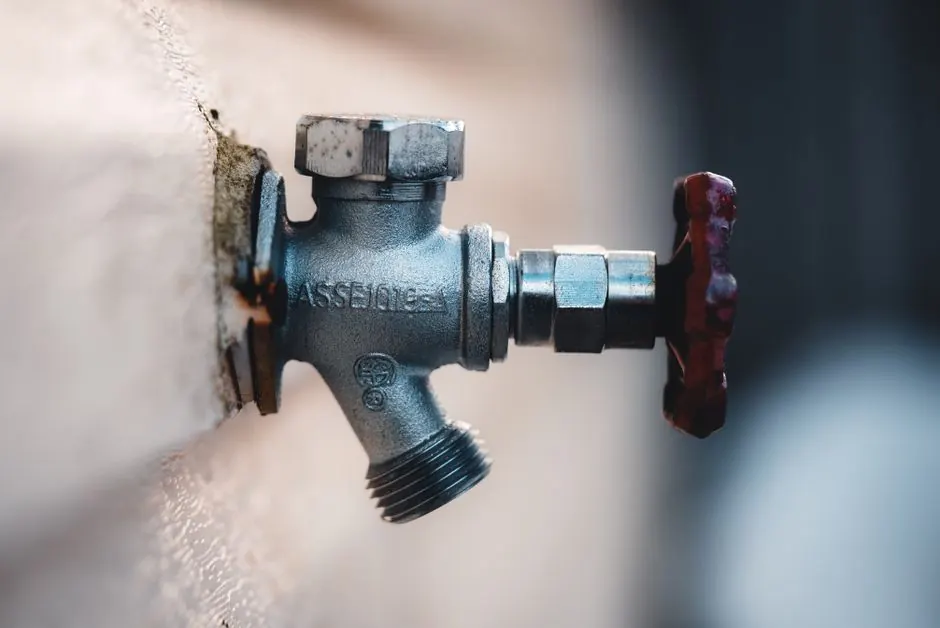
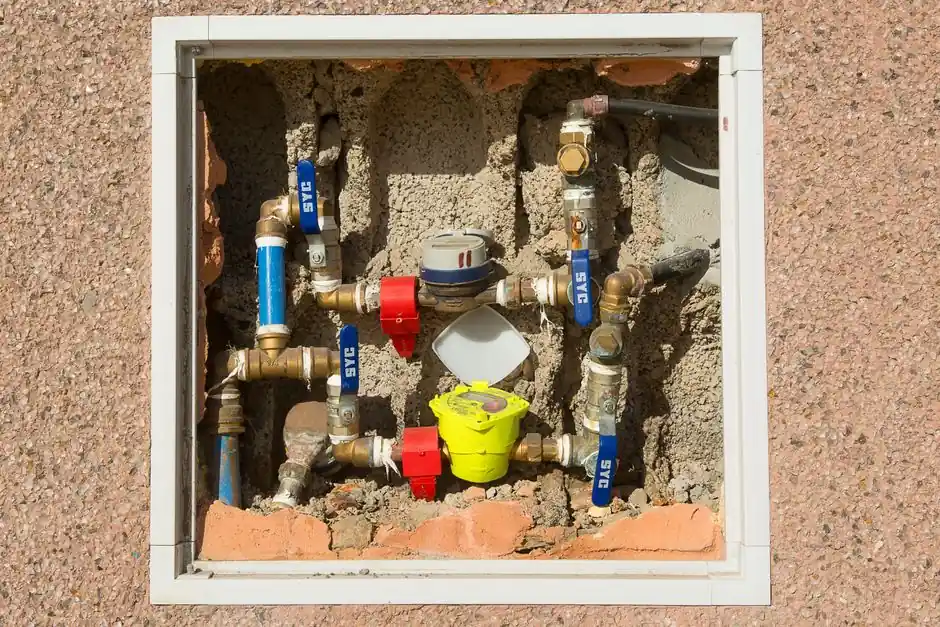
Valves seize or weep when operated.
Plumbing added to older floor plans can leak into ceilings below.
Basement tanks fail with age, often unnoticed.
Here are the signs worth acting on.
Low pressure at upstairs fixtures
Corroded galvanized pipes restrict flow.
Rust-colored water
Interior corrosion in pipes or water heater.
A damp patch at the base of a basement wall
Check plumbing before assuming seepage.
Slow drains in several fixtures
A drain stack or house sewer may be partly blocked.
A ceiling stain below a bathroom
Likely a fixture, supply or drain leak above.
Water bills that rise slowly
Silent leaks accumulate.
Streets that help place this part of southern Oak Park.
A main corridor along the district's northern edge.
A nearby corridor of shops, galleries and restaurants.
The district's eastern boundary.
The street that gives the district its name.
Service ZIP codes for the village are 60301, 60302, 60303 and 60304. Gunderson addresses are covered with the rest of Oak Park.
See all Oak Park service areas.
Foursquares respond to seasons in predictable ways.
Exterior-wall pipes and porch connections can freeze.
Tip: Keep cabinet doors open on cold nights for exterior-wall sinks.
Heavy rain tests basement walls and floor drains.
Tip: Test your sump pump and clear window wells.
Humidity and condensation on cold pipes.
Tip: Insulate cold-water pipes and use a dehumidifier.
Furnace or boiler start-up.
Tip: Check for valve weeps and drain leaks.
Leak detection information for the neighborhoods next to Gunderson Historic District.
Nearby Area
Southern Oak Park near Roosevelt Road.
View South Oak ParkNearby Area
Residential blocks near Madison Street.
View Central Oak ParkNearby Area
The Ridgeland corridor.
View RidgelandNearby Area
Lake Street's commercial core.
View Downtown Oak ParkQuick answers for local homeowners and property managers.
Call to be pointed to a local professional who knows century-old Foursquares.
Tell us what you are seeing — a damp spot, a high water bill, a sound in the wall — and we will point you to a local leak detection professional who can look at it.
Phone
(708) 221-8167Address
439 Madison St
Oak Park, IL 60302
Service ZIP Codes
60301, 60302, 60303, 60304
Oak Park, Cook County, Illinois